9 November 2026
Repointing vs. rebuilding: telling them apart in a condition survey record
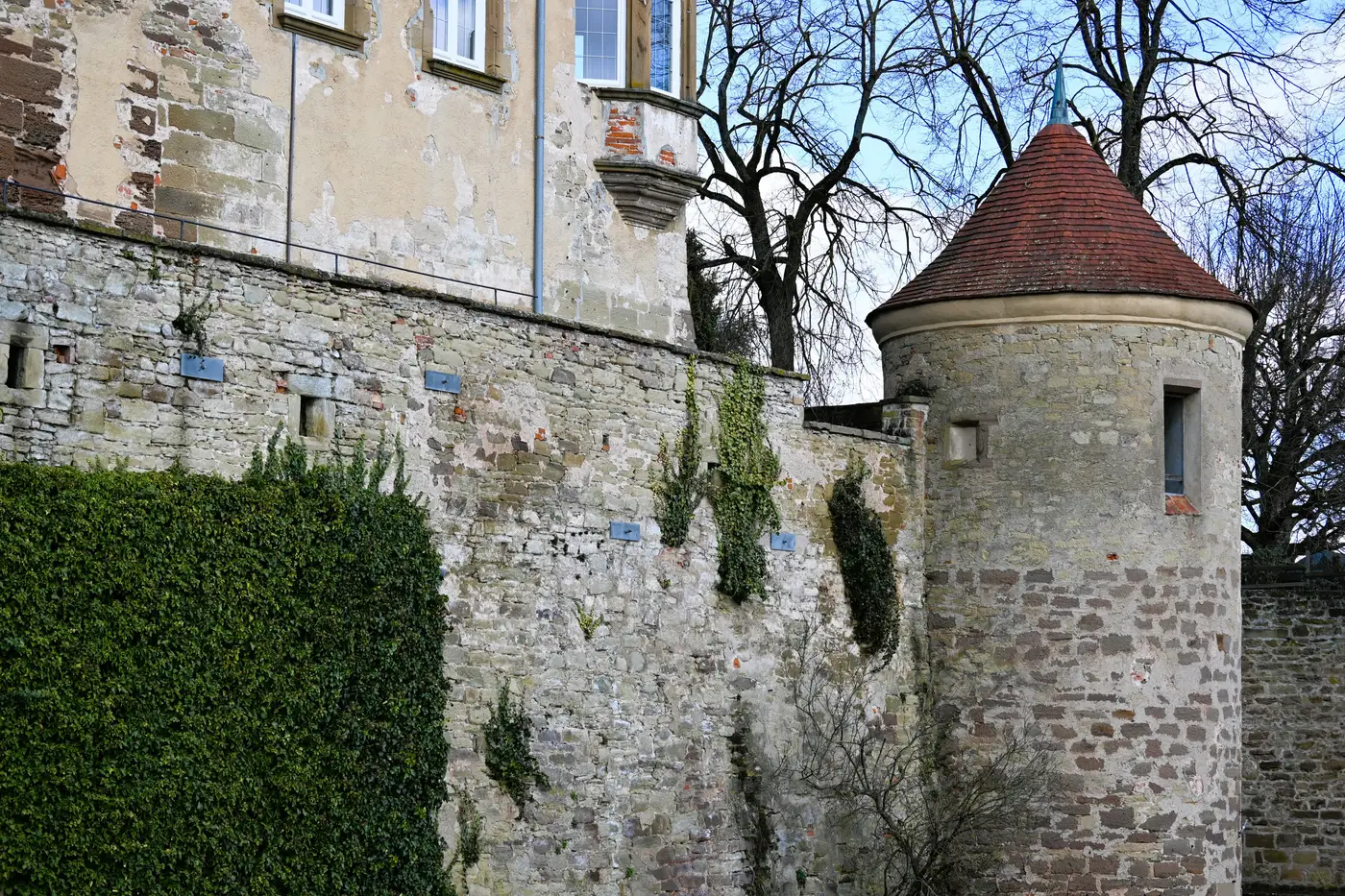
A condition survey rarely says "rebuild this wall" on day one. It says the mortar is receding, a course has shifted two millimetres since the last visit, or a quoin has rotated out of plane. The judgment about repointing versus rebuilding gets made later, often by someone who wasn't on site for the first inspection. The record you leave behind is what that decision rests on.
The trouble is that most condition records still lean on photographs taken from roughly the same spot, a few years apart, with a note like "mortar loss appears worse." That's an impression, not a measurement. Mortar loss that looks worse and a wall moving out of plumb are two different problems with two very different remedies, and a photo comparison can't reliably tell them apart.
What separates a repointing case from a rebuilding case
Repointing addresses the joint. The masonry units themselves are sound, still bearing load correctly, still in their original plane. What's failing is the bedding mortar: it's eroded below the face of the stone, it's cracked along the joint line, or it's let water track into the core of the wall. None of that requires taking the wall apart. It requires raking out the old mortar to a consistent depth and repacking with a compatible mix.
Rebuilding is a different category of problem. It comes into play when the units themselves have moved: a bulge in the wall face, rotation of individual stones, a section that's dropped relative to the coursing either side of it, or a crack that runs through the masonry rather than along a joint. At that point the structure has lost its original geometry, and repointing the joints won't put it back. The wall needs to come down in the affected area and go back up true.
The problem for a conservation officer writing the record is that early-stage rebuilding candidates often look, from a photograph, exactly like advanced repointing candidates. A bulge of a few centimetres over a two-metre run of wall doesn't read as a bulge in a flat photo. It reads as "mortar looks rough here too." Deformation at that scale is the whole reason the distinction gets missed, and missed early, which is exactly when catching it is cheapest.
Writing it into the record so the next officer doesn't have to guess
A photograph records how the wall looked from one angle on one day. It carries no geometry to check against later. A measurable record of the wall's geometry at the time of survey, repeated at the next one, closes that gap. If a 3D model from the baseline shows the wall face at one plane, and the model from this year's review shows the same section displaced, that's a documented fact, not a judgment call based on how the light fell on the joints.
A record built this way answers the questions a condition report needs to answer on review day:
- Has this section moved since the baseline, and by how much, rather than "does it look worse"
- Is the deterioration confined to the mortar or has it reached the masonry units
- Which bays or courses need monitoring at the next review, and which can be signed off
That's the gap Heritage Documentation is built to close: a photogrammetric 3D model flown at the baseline survey, and flown again at each condition review, so the comparison between visits is a measurement against the earlier model rather than two photographs held side by side. The model doesn't tell you whether to specify repointing or rebuilding. It tells you, with something you can actually check, whether the wall has stayed where it was or moved, which is the first fact any specification depends on.
For a monument with recurring masonry decay, that's the difference between a condition record that documents an opinion and one that documents a baseline. If repointing versus rebuilding is a recurring call on your sites, it's worth seeing what a measurable baseline looks like for the next review cycle.